


VBAC: What You Need to Know About Vaginal Birth After Cesarean

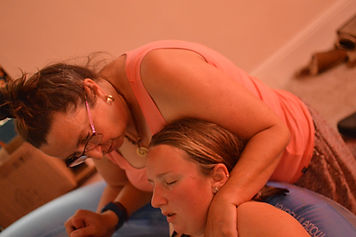
Pregnancy and birth can feel like a whirlwind of choices — some exciting, some overwhelming. One of the questions I hear most as a doula is about VBACs (vaginal birth after Cesarean) and how to feel confident making decisions that are right for you.
I know this feeling well. I had my own VBAC at home, fully informed and supported by midwives and my doula. That experience was empowering, beautiful, and transformative. It showed me how continuity of care, trusted support, and evidence-based guidance can help you trust your body, stay calm, and feel truly in control of your birth experience.
Every family’s birth story is unique, and every decision matters. Whether you’re planning a VBAC, considering interventions, or simply exploring your options, the goal is the same: to feel informed, supported, and confident in your journey.
VBAC Success and Benefits
Success Rates:
After one C-section, about 3 in 4 women with a straightforward pregnancy who go into labour naturally will have a successful vaginal birth. (RCOG)
If you’ve had a vaginal birth previously, your chances increase to 8–9 in 10.
Overall, studies show 60–80% success rates, making VBAC a realistic option for many families.
Advantages of VBAC:
Shorter hospital stay and quicker recovery
Immediate skin-to-skin contact and early breastfeeding, which supports bonding
Avoidance of surgical risks associated with repeat C-sections
VBAC is considered safe for most people with a previous low-transverse C-section and is often a valid, empowering choice.
Understanding Risk: Actual vs Perceived
Actual Risk: The most serious risk is uterine rupture, which occurs in less than 0.5% of women with a single low-transverse incision.
Perceived Risk: VBAC often feels riskier than it actually is. Fear of rupture, mixed advice, or focus on unsuccessful VBACs can feel daunting — even though a successful VBAC usually has fewer complications than a repeat C-section.
Factors influencing your decision:
Previous birth experiences
Future pregnancy plans
Individual factors such as age, health, and type of uterine incision
Support and evidence-based guidance are key. Most eligible women with a low-transverse scar are considered safe candidates for VBAC by RCOG and ACOG.
Why Having a Doula Matters — Especially with VBAC
Making sense of statistics and options can feel overwhelming. A doula can:
Help you explore risks and benefits in a calm, non-judgemental space
Support you to create a flexible, personalised birth plan
Offer emotional holding and practical comfort during labour
Advocate for you with your midwife or healthcare team if needed
Provide continuity of care, no matter what your birth story becomes
Having someone who listens, supports, and holds space can make all the difference. From my own VBAC, I know how reassuring it is to have trusted support — it allows you to relax, trust your body, and focus on the experience rather than the anxiety.
Your Birth, Your Story
Whether you choose VBAC, a repeat C-section, or something in between — your birth story is valid, valuable, and uniquely yours. Making an informed choice, guided by your intuition and supported by care that respects your values, is what matters most.
If you’d like guidance, reassurance, or someone to walk alongside you while you consider your birth options — I’m here. We can explore what feels right for you, plan carefully, and build confidence no matter what your path looks like.
Rosie x


When researching something, I like comparing different viewpoints. This is another site I found recently: https://infowomenspace.com. There are a variety of topics covered there.